Cross-Platform App Development

One app for iOS and Android, built once

We use React Native on most projects and Flutter where it fits better, so you maintain one codebase instead of two.

LNOKS builds cross-platform mobile applications mostly in React Native, and in Flutter where it fits the product better, depending on the team's existing stack and the product's animation and platform-API needs. The app ships to iOS and Android from a single codebase. Depending on the project, this can include shared business logic, platform-specific native modules, and automated pipelines for parallel store submissions. We can also build the back end, with a clean API between it and the app, so one team owns both and you can change either side later without rewriting the other.

Deliverables

What you get

  • Mobile apps

    We build mobile apps for iOS and Android, native or cross-platform depending on the project. We test on a range of devices and operating system versions before release, and take the app through store review.

  • AI Agents

    We build AI agents that take on repetitive tasks, such as answering routine questions or sorting incoming requests, inside your product or the systems your team already uses. We start with one workflow, so you can see what the agent handles and what it passes to a person.

Our work

Work we have delivered.

Projects where we delivered this kind of work.

View all

Before you enquire

Frequently asked questions

Cross-platform is a good choice for most business and SaaS apps that need the same features on iOS and Android and want to launch sooner. One team builds each feature once in a single codebase, and it reaches both platforms in the same release. If the product depends on heavy animation or deep platform access, we check during scoping whether a native build fits better.

Both. A cross-platform build is one codebase for iOS and Android, usually in React Native or Flutter. We recommend it or a native build based on the performance the product needs, your budget and how quickly you need to launch. If the product leans on heavy animation or deep access to phone features, we talk through whether native is the better fit.

Mostly React Native, with Flutter where it suits the product better. Both let us balance build speed, performance and long-term maintenance. If one feature needs more than the framework offers, we write just that part as native code.

For most business and SaaS apps, performance is close to native and users will not notice a difference. Where a feature needs deeper access, such as heavy animation or platform-specific APIs, we write that part as a native module. We look for those features during scoping, so slow paths are found before launch rather than after.

Yes. With one codebase for iOS and Android, each connection to your CRMs, ERPs, internal APIs and third-party services is built once and works on both platforms. The integration points are agreed during scoping, so everyone knows where each piece of data comes from and where it goes before development starts.

We test every screen on physical iPhones and Android phones as well as simulators, because gestures, the on-screen keyboard and performance often behave differently on real hardware. One shared design system keeps screens consistent across both platforms, while the app still respects each platform's conventions.

Yes, and we plan the architecture to keep that option open. Business logic sits apart from the user interface, and platform-specific code is already kept in its own modules. A later native rebuild then replaces the app's front layer rather than the whole system your business logic lives in.

Client reviews

What clients say about working with us.

Tell us about your project.

We reply within one business day.

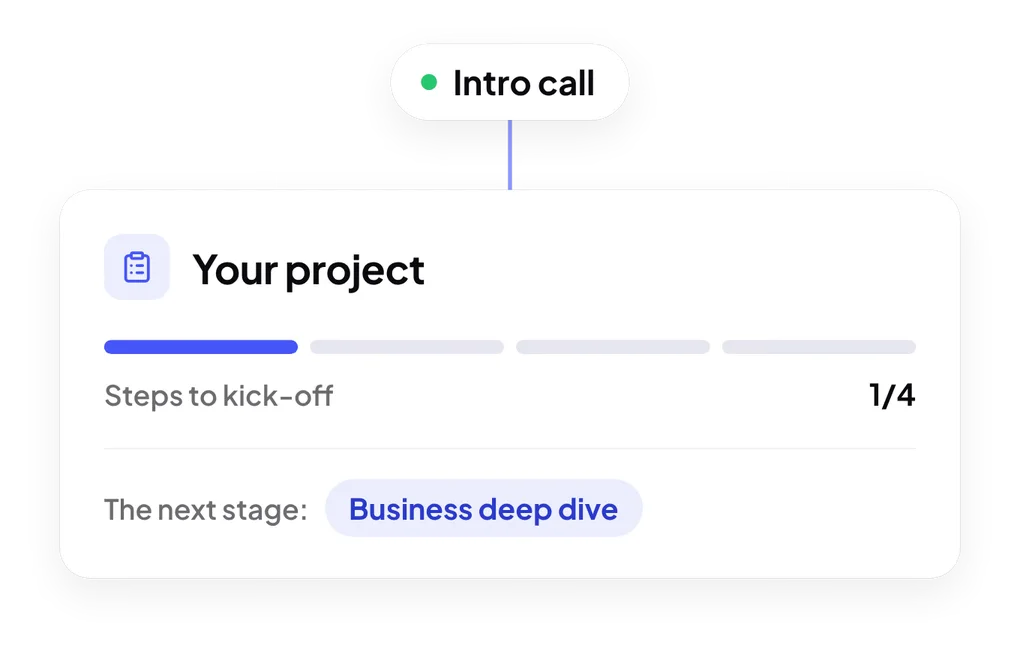
Steps to kick-off: intro call, business deep dive, proposal and discovery phase